


Deeptech startups should be as passionate about market development as they are about technology development
The world needs deep tech to succeed. Not just to be invented, but to be adopted, scaled and sustained. That only happens when the commercial engine is built with the same rigour, discipline and ambition as the technology itself.
Most deep tech companies develop their technology. Almost none proactively develop their market.
The pattern is consistent across sectors and geographies. Brilliant founders. Breakthrough science. Years of technical development. And then, a commercial model built too late, too thin, and too disconnected from the technology it's meant to sell.
The result is a gap between what the technology can do and what the market will adopt. That gap costs funding rounds. It costs exits. Sometimes it costs the company.
It is not a technology problem. It is a commercial engineering problem.
The world needs deep tech to succeed. Not just to be invented, but to be adopted, scaled and sustained. That only happens when the commercial engine is built with the same rigour, discipline and ambition as the technology itself.

Improving the success rate of deep tech ventures through commercial engineering.
I help deep tech founders and leaders build the commercial engine in parallel with the technology, systematically, phase by phase, from first customer insight to scalable market success.
I accelerate that journey by grounding teams in deep market and customer understanding, sharpening strategic choices, insisting on disciplined market validation alongside product and technology validation, enabling strong cross-functional alignment, and translating strategy into prioritized execution.
An engineering approach to market and commercial development.
Commercial engineering applies the same logic engineers use to develop technology (explicit phases, clear deliverables, systematic validation) to the development of markets, customers and commercial models. It runs in parallel with technology development from day one, with product versions as the deliberate sync points between both tracks.
Each funding stage is a commercial engineering phase with a specific objective:
- Seed: Prove problem-solution fit, the problem is real, the solution is right, the price is valid
- Series A: Develop product and pre-validate market traction through pilots and early adopters
- Series B: Prove product-market fit, sales, routine use, stickiness, right trending in commercial metrics
- Series C: Validate expansion strategy, growth segments, geographies, scalable sales motion
The frameworks I use are not secret — they are widely known. What I bring is the judgment to apply them correctly in complex, high-stakes environments where most companies get it wrong.

Why Me?
Builder with trained intuition that brings clarity and structure across technology, product and commercial.
Builder, not advisor: I don't deliver recommendations and leave. I build the engine alongside the team: frameworks, processes, plans, and the cross-functional alignment that makes them real. Player-coach by nature, not by method.
Trained intuition: I have built and broken commercial engines enough times to recognise failure modes before they become expensive. That judgment cannot be learned from a framework, it comes from doing it, getting it wrong, and doing it better.
Systems thinking in complexity: I see the whole board (market, product, evidence, investor narrative, team dynamics) simultaneously. In environments where most people are managing their function, I am designing the system that makes all functions move together.
Full-stack fluency: I move fluently across technology, product, science, commercial and financial conversations, which. Most people operate in one lane. I connect them all.
If this sounds like the support you need, let’s talk and explore whether we’re the right match.
Jasper Peeters
Grounded in the most demanding environments. Applicable across European deep tech.
My commercial engineering methodology is grounded in the sectors where getting it wrong is most costly, regulated medtech and complex high-tech systems. That rigour transfers naturally across the European deep tech landscape.
MedTech & Surgical Robotics, Life Science Equipment, Diagnostic AI, Computational Biology, Clean Tech, Hardware, Advanced Manufacturing, Photonics & Quantum Semiconductors, Adjacent Defence Tech
Trusted By High-tech Leaders

“Jasper leads with a pragmatic, facilitative style that empowered our team with clarity and momentum.”
Niek Rijnveld
CEO Optics 11 Life

"Jasper brings structure and clarity, helping R&D and commercial teams move forward with focus and alignment."
Gerrit Sitters
GM Cell Avidity &
Co-Founder LUMICKS

"Jasper combines a unique blend of strategic insight, innovative spirit and customer focus to create winning sales strategies."
Stuart Shand
CCO IBEX AI

“Jasper bridges R&D and commercial teams with clarity and customer focus. He makes complexity actionable.”
Dirk Jan Swagerman
Sr. Director R&D, Philips Digital Pathology
A Track Record of Launching First-to-Market Products
I have launched multiple first-to-market products across medical imaging and life-science instruments. Highlights include:
-
Global roll-out of the first scalable digital pathology solution for primary diagnosis, enabling 20 fully digitised labs with 300 more underway in 2024.
-
Building a scalable go-to-market model for pioneering AI in cancer diagnostics, integrating solutions with all major platform vendors to accelerate speed and quality of diagnosis.
-
Reviving adoption of Cell Avidity as a predictive indicator for cell-therapy success, launching the next-generation platform first as a service (Avidigo) and then as an instrument (Avidion).
-
Validating new market segments for mechanobiology solutions, unlocking new applications and accelerating commercial growth.
What these experiences taught me:
Breakthrough science and technology are not enough. Market success requires aligning many moving parts:
-
A product that solves the core customer problems, beyond solving the technical or scientific challenge!
-
Evidence that the value promise is real, revenue is great but not the right evidence!
-
Services that ensure successful adoption and outcomes, consultative selling and customer success services should be part of the product vision!
-
A pricing and revenue model aligned with customer value and business sustainability, pricing and consumption experiments are key!
-
A go-to-market model that reaches, convinces, and expands the right segments, based on a systematic market development approach..
All of this must be designed, built, and tested in the market through multiple iterations. That is the essence of high-tech product management: orchestrating science, engineering, commercial, and customer teams to deliver real customer and business value through core product and go-to-market, delivery and customer success processes.
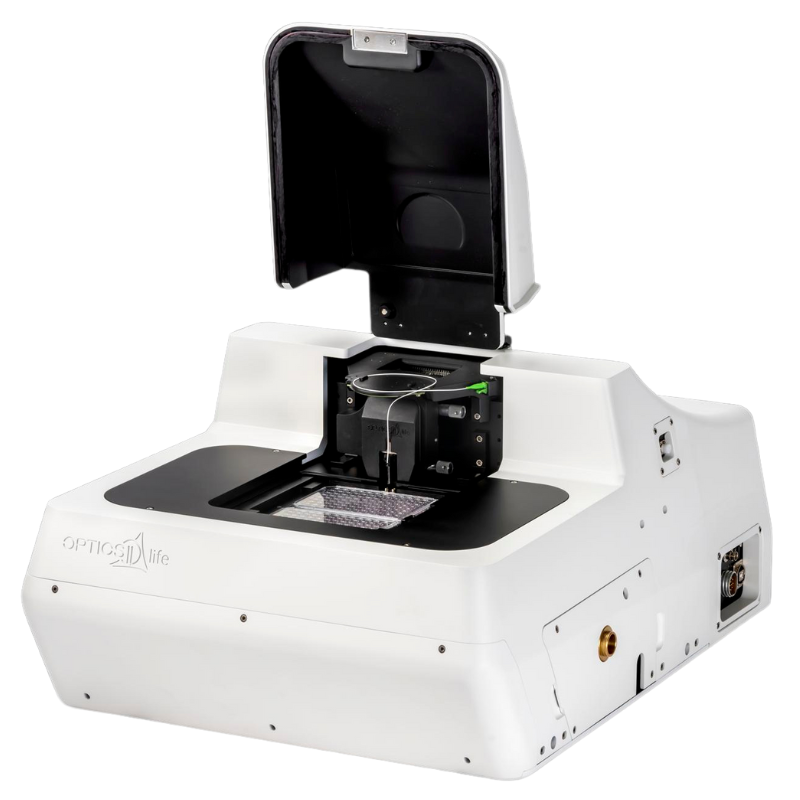

Measuring forces in biology to add new insights to drug development


Introducing Avidity, an exciting new biomarker to predict cell therapy success


Pioneering AI in histopathology diagnosis


First of a kind solution for primary diagnosis in pathology
Socials